By Suhajda Péter
Pictures for Walls: How to Choose the Size, Style, and Spot for Your Pet Portrait
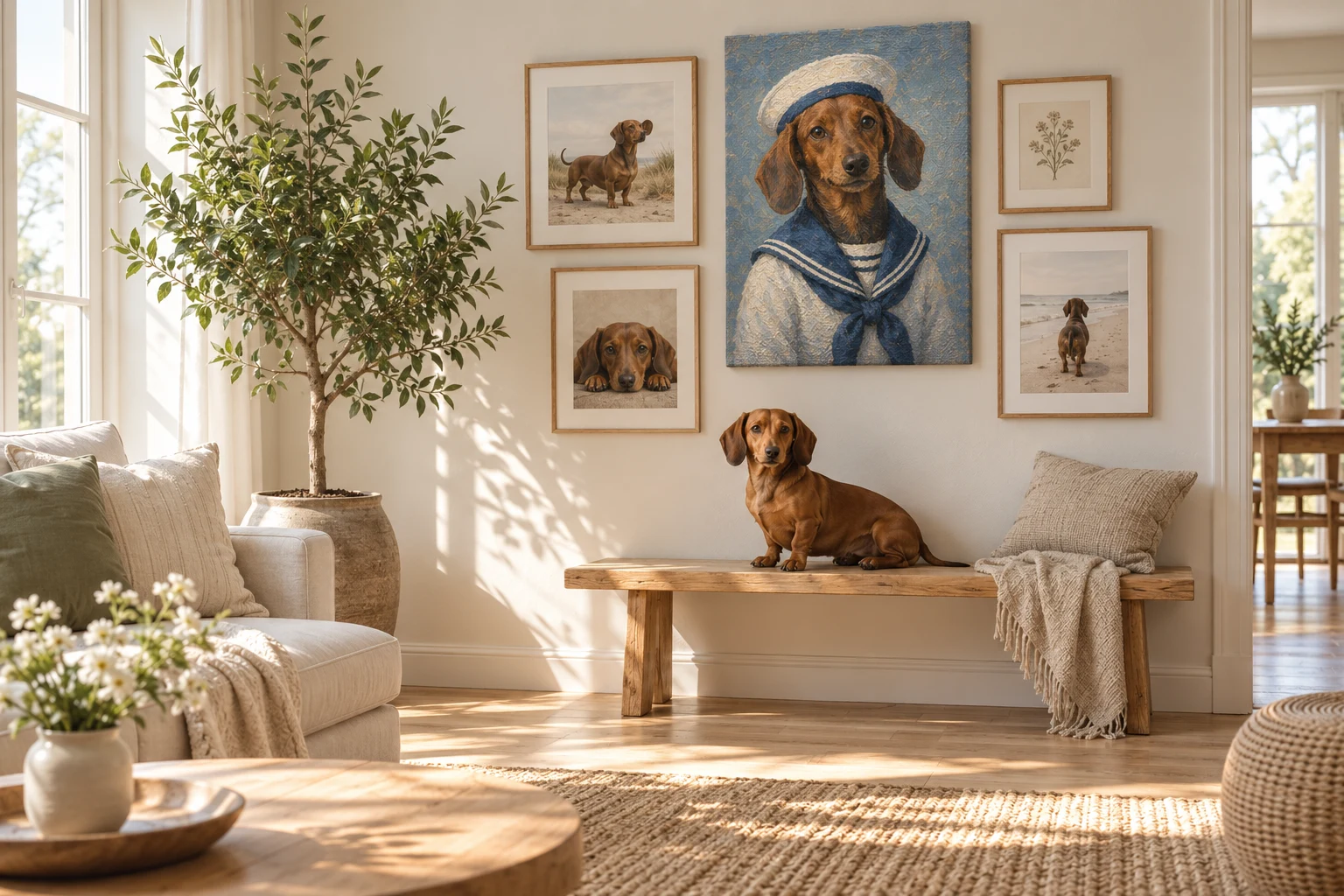
When searching for pictures for walls, start by deciding on the location and the atmosphere you want to create: do you need a single focal piece or a gallery arrangement made up of several smaller works? Next, choose a size that balances your furniture and open wall space, select a style that complements your interior color palette, and test the layout with paper templates before hanging anything up.
What types of wall pictures work best when featuring your pet?
Wall art can take many forms: your own photograph, a graphic print, an illustration, or a stylized portrait. Each brings a distinct energy to the room. A crisp, natural photograph feels immediate and personal, capturing your pet’s familiar posture, gaze, and daily world. A minimalist drawing can feel more understated, especially in rooms where shelves and textiles already introduce plenty of color. A thematic portrait makes a bolder statement, which means it needs deliberate breathing room around it.
Start with a simple question: do you want visitors to notice your pet right away, or would you prefer the piece to reveal its personal story only on a second look? The first approach works best with strong contrast and a clean background. The second benefits from softer tones, fewer details, and a palette closely tied to the room. In a portrait of a pet rabbit, for instance, the distinctive contour of the ears and an expressive gaze are interesting enough on their own; there is no need to surround them with rabbit-themed slogans or novelty figurines.
If you plan to mix different kinds of artwork, look for a common denominator: a shared background tone, matching frame finishes, or consistent spacing between pieces. Not every piece on the wall has to share the exact same style, but the overall display should have a clear visual rhythm.
Pictures for walls: how to choose the right size for furniture and viewing distance?
Do not judge size solely in an online shop or on a screen. Measure the open wall space along with the furniture sitting beneath it, then mark the planned dimensions on the wall using painter’s tape. If the picture gets lost above a large sofa, you probably need a larger format or a multi-piece arrangement. If it feels squeezed between shelves and wall corners, choose a smaller size or look for a quieter, less crowded wall.
A small portrait works beautifully when viewed up close, such as above a desk or on a narrow console table in an entryway. From across a living room, however, tiny facial details become difficult to read; in larger rooms, a bold silhouette, a simpler background, or a larger format works much better. While large prints make a dramatic impression, they also make flaws in a low-resolution source photo far more noticeable. Always inspect your image at full size on a monitor before printing, rather than just glancing at it on a phone screen.
The orientation of the artwork matters just as much. A portrait-oriented vertical piece fills the narrow space between two windows effectively, whereas a wide credenza often pairs best with a horizontal composition or several vertical prints hung side by side. Your goal is not to cover every square inch of blank wall: leaving negative space around the artwork is what truly allows your pet’s portrait to stand out.
Where should you hang the picture for comfortable viewing?
The best spot is not always the largest empty wall in the house. Think about where you naturally look each day: from the sofa, the dining table, beside the bed, or when walking through the front door? Position the center of the portrait at a comfortable eye level tailored to that specific viewing point. For a cozy reading corner where you are usually seated, sit down to make sure the frame is not mounted too high.
When hanging art above furniture, keep it visually anchored to the piece below rather than letting it float awkwardly toward the ceiling. At the same time, leave enough clearance so that a table lamp, a houseplant, or a decorative object does not obscure your pet’s face. Near doorways or along narrow hallways, be careful not to place frames where passing foot traffic or an opening door could bump into them.
Before drilling any holes, tape a sheet of paper cut to the exact size of your frame onto the wall. Check it in the morning light, during the afternoon, and under artificial lighting in the evening. This reveals whether a nearby window produces harsh reflections or an overhead light washes out crucial details. For glazed frames, the angle of incoming light is especially critical; if the placement cannot be changed, consider non-reflective glass or alternative framing options.
Single statement piece or a gallery wall? Keeping the arrangement cohesive
A single statement picture is ideal when the wall already features another strong focal point, such as patterned wallpaper, a prominent light fixture, or floor-to-ceiling bookshelves. In those settings, a rabbit portrait acts as a refined accent. A gallery wall shines when you want to showcase multiple memories together and have enough wall area to leave breathing room between frames. Rather than focusing on how many frames you have, think about the total surface area you want to treat as a unified composition.
Lay your pictures out on the floor first and establish an anchor point, such as the largest portrait or an imaginary center line. Maintain consistent spacing between neighboring frames, but do not feel obligated to make every frame identical in size. Combining one larger focal piece with several smaller prints often looks more relaxed and natural than clustering several identical pieces that compete for attention.
A cohesive gallery wall does not mean putting every photo you own on display. When grouping family photos, travel prints, and pet portraits together, tie them together with a recurring color accent or matching frame profiles. If your goal is a more playful, eclectic look, align either the outer edges or the center axes of the frames. Even an eclectic gallery feels intentional when at least one structural rule holds it together.
How to match your pet portrait with the room’s interior style
Do not just ask yourself whether you like the portrait in isolation. Hold a sample or digital preview against the intended wall and observe how it interacts with the room’s existing palette. In a serene, bright space, a soft background color can subtly connect the portrait to your curtains or sofa upholstery. On a darker accent wall, lighter details help keep your pet’s face from fading into the background.
For example, in the “Midshipman” style, your rabbit can appear wearing a white sailor cap and a crisp blue-and-white uniform set against a muted slate-blue backdrop. This pairs effortlessly with rooms that already incorporate navy, denim, or off-white accents; on a heavily patterned, multicolored wall, however, the fine details of the uniform might blend into the surroundings. In that situation, leave generous negative space around the artwork or choose a calmer wall surface.
Humorous artwork remains charming when other decorative pieces in the room do not repeat the exact same gag. For an elegant setting, discover practical tips in our guide on balancing humor with understated decor. If you want a custom portrait of your own pet, you can explore the Pawlazzo portrait styles and preview free versions with your own pet’s photo before buying anything. That way, you can judge how the piece complements your room using your pet’s actual face, rather than having to imagine it from a generic sample.
Mistakes to avoid before hanging your art
- Scattering tiny frames across a large wall: from a distance, fine details disappear and the arrangement feels fragmented. Use paper templates first to confirm that the overall grouping carries enough visual weight.
- Inconsistent spacing: irregular gaps make related frames look disjointed. Measure and mark your spacing carefully before drilling into the wall.
- Ignoring room lighting: reflections from windows or table lamps can ruin artwork visibility. Examine the intended spot at different times of day and with lamps turned on.
- Overcrowding the wall: if your portrait is surrounded by busy wall patterns, word signs, and floating shelves, your pet gets lost in the noise. Remove one or two decorative items before adding another picture.
- Hanging only for standing eye level: if the room is primarily used for relaxing or dining, evaluate the wall from a seated position. Everyday room function matters more than rigid mounting rules.
Finally, step back to the spot where you spend the most time looking toward that wall. If your eye immediately catches an alignment flaw, adjust the placement. But if your gaze lands naturally on the portrait and moves comfortably across the rest of the room, your proportions are spot on. A pet portrait does not need to dominate the entire room to make a wall feel truly like home.
Frequently asked questions
What size picture should I hang above the sofa?
Base your decision on the dimensions of the sofa and the available wall space rather than just the frame itself. Use paper cutouts or painter's tape to outline the planned dimensions on the wall, then step back to evaluate the scale from the sofa and from across the room. If the picture looks lost from a distance, choose a larger size or arrange several coordinating prints together.
How should I arrange multiple pictures of different sizes on a wall?
Start by laying the frames out on the floor to find a natural focal point, such as the largest portrait or a central horizontal axis to anchor the layout. Keep the spacing between adjacent frames consistent, and use matching frame colors or shared background tones to unite different dimensions. Before drilling, tape paper templates to the wall to verify the full composition in place.
Where should I place a picture if light from the window reflects on it?
Try shifting the artwork slightly to one side or adjusting its hanging height so natural daylight does not bounce straight back toward your main viewing angle. Check the spot at different times of day and with indoor lights turned on. When hanging glazed artwork, choosing non-reflective glass and the right frame style can also help eliminate distracting glare.
How can a rabbit portrait feel personal without looking kitschy?
Let your rabbit's natural face and distinctive silhouette take center stage, and avoid repeating bunny motifs across surrounding accessories. Pick a background color that complements the existing tones of the room, and leave generous negative space around the frame. This keeps the portrait an elegant accent rather than an over-the-top novelty piece.
Related articles
 Interior & design
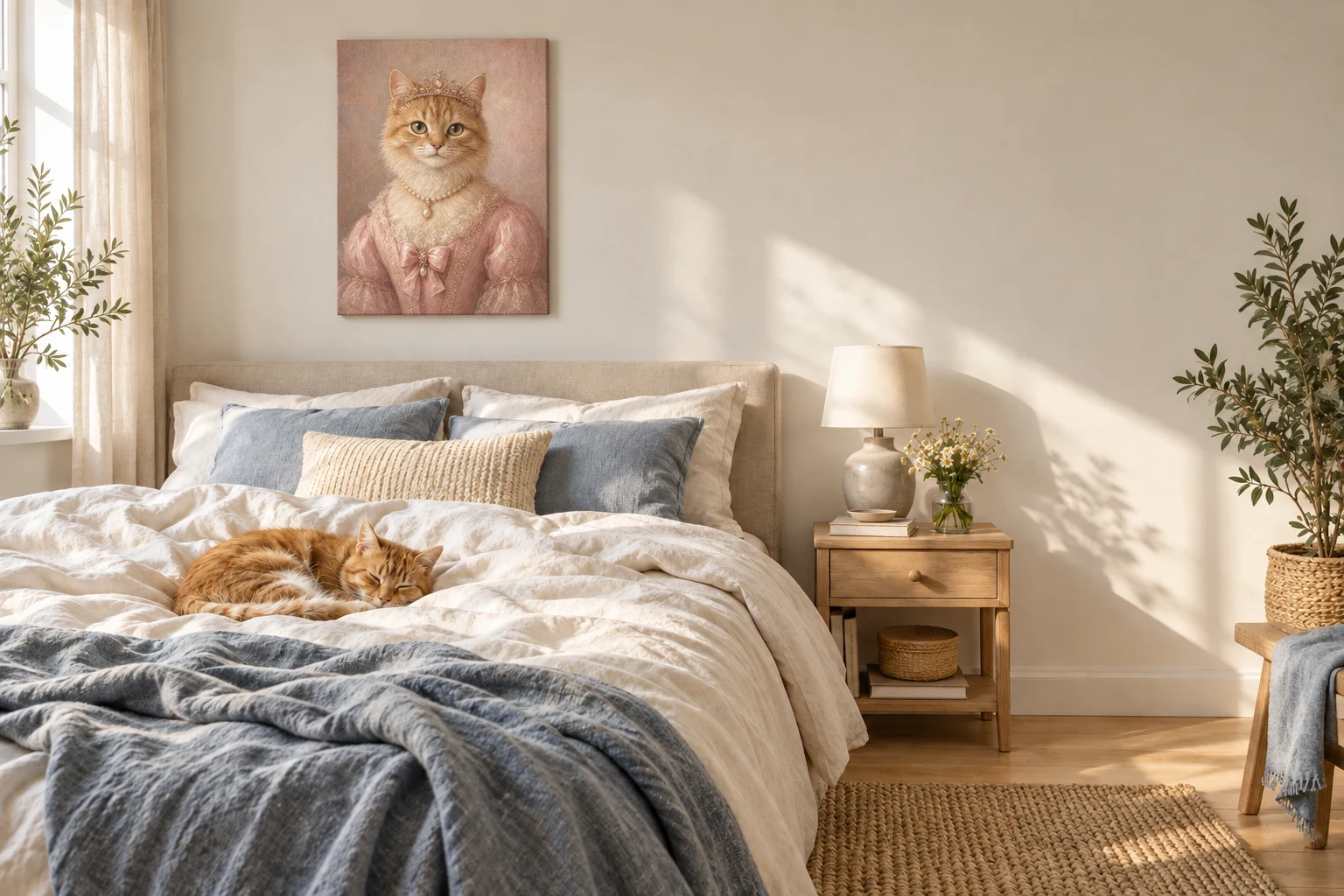
Bedroom Wall Art: How to Create a Calming, Personal Space
Bedroom wall art works best when its colors, subject, and size invite rest rather than compete for attention. This guide helps you choose the right piece, fi...
Read more Interior & design
How to Add Humor to an Elegant Room Without Looking Tacky
The secret to a perfect interior is never taking itself too seriously. Discover the rule of the unexpected focal point and learn how a royal portrait of your...
Read more