By Suhajda Péter
Bedroom Wall Art: How to Create a Calming, Personal Space
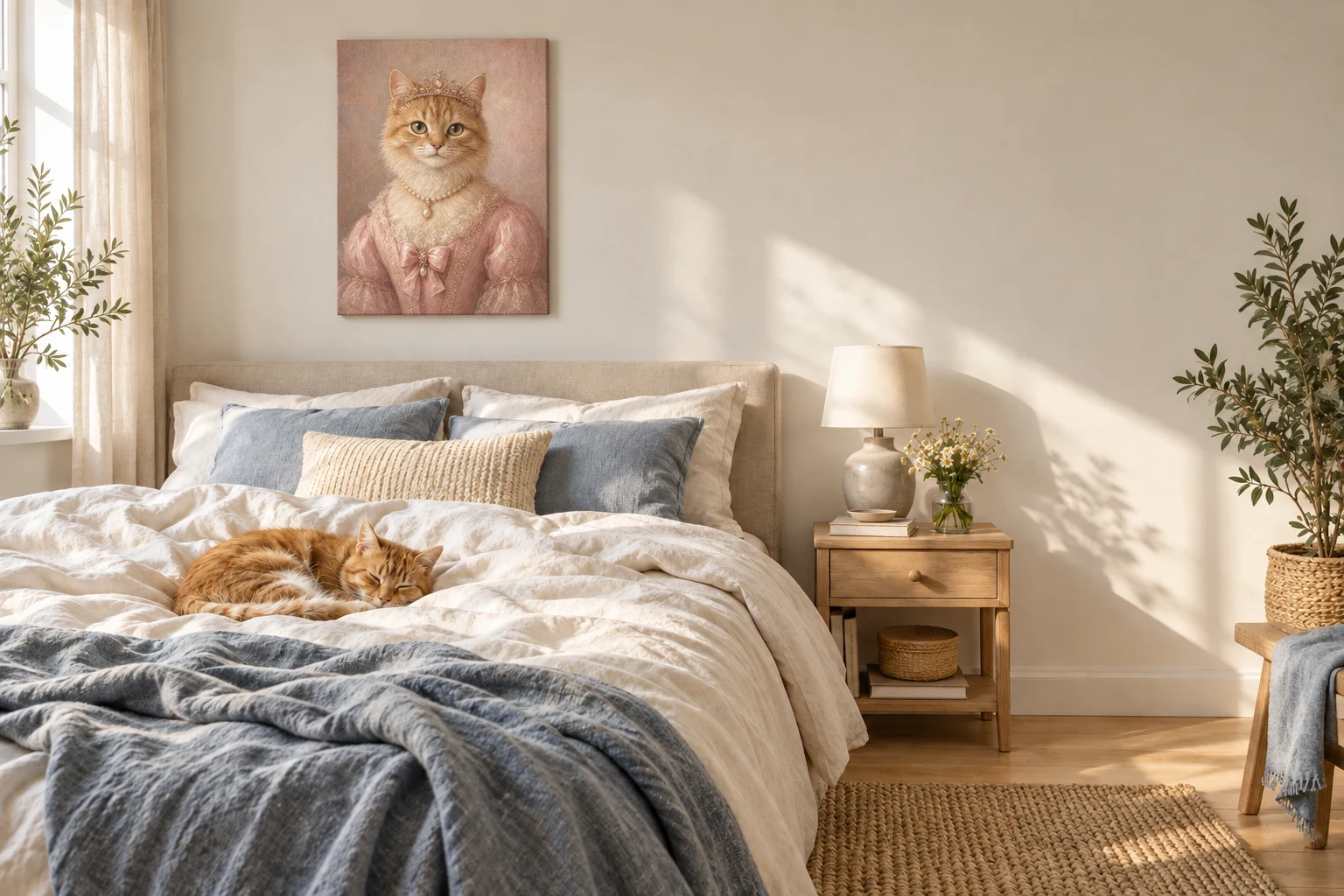
The right bedroom wall art creates a serene atmosphere, perfectly proportioned to your bed or the wall space it occupies. Choosing muted colors and a subject you love seeing morning and night sets the right tone, while aligning the piece with your furniture and natural lighting brings harmony to the entire room.
What Makes Bedroom Art Truly Relaxing?
In a living room, a bold piece of art can spark conversation. In the bedroom, it serves a different purpose: it adds personality without demanding your attention every time you walk in. That does not mean you are limited to neutral landscapes. A more striking artwork can still feel restful if it has breathing room around it and is not surrounded by visual clutter.
Start by taking in what is already in the room. Patterned bedding, feature wallpaper, or open shelving call for simpler artwork. Against a plain wall and understated textiles, there is plenty of room for a characterful portrait or an expressive abstract piece. The goal is not to conform to a rigid style, but to create a clear focal point where your eyes can naturally rest.
Perspective also matters. Looking at a picture from bed reveals different details than seeing it when you step through the doorway. Consider both vantage points: something that looks dynamic on a bare wall can feel overwhelming when viewed up close every evening.
Choosing Bedroom Wall Art: Colors and Subjects
The easiest starting point is your room’s existing palette. Look for one or two shades in the artwork that echo your throw blankets, curtains, or furniture. They do not need to match exactly; a warm cream background, for instance, pairs effortlessly with natural wood and off-white fabrics. However, too much uniformity can make the room look flat, so a touch of contrast goes a long way.
When choosing a subject, consider the mood you want to wake up to every day. Soft landscapes with distant horizons bring a sense of openness, while minimalist abstracts work through gentle rhythm and tone. Personal photos feel intimate, but keep backgrounds tidy and ensure prints are not darker than they appear on screen. A portrait creates a strong emotional anchor, making it especially important that its tones harmonize with the room.
You do not need to ban vibrant colors altogether. A single deep blue or terracotta accent can add warmth to a neutral space. But if a piece features competing bright tones, busy lettering, or hectic action, try picturing it in a smaller format or test it in the space before committing.
What Size Artwork Should Go Above the Bed?
Above the bed, art feels cohesive when it does not look like a tiny, isolated spot floating over the headboard. A good rule of thumb is choosing a single piece or gallery arrangement whose total width is slightly narrower than the headboard. This is not a rigid rule: on a tall, narrow wall, a portrait format works wonderfully as long as you leave intentional empty space on either side.
Measure the available wall space and always calculate with the total outer dimensions, including frames. If you are hanging multiple pieces, factor in the spacing between them. Taping paper templates to the wall gives you an instant visual of whether the size looks lost above the bed or crowded against lighting and the ceiling.
A single large print often creates a calmer feel because it minimizes frames and visual breaks. A pair or triptych can establish a pleasant rhythm, provided the pieces share consistent alignment and visual weight. If the bedroom already has plenty of texture and detail, a single focal piece is usually the safer choice.
Where to Place Wall Art in a Cozy Corner
Not every bedroom needs art directly over the bed. The wall above an armchair, a dresser, or a nightstand can offer a quieter, more personal spot. Instead of centering the art on the whole wall, anchor it to the furniture below it. For example, hang a print relatively close above a dresser rather than floating it halfway up to the ceiling.
In a narrow corner, a vertical print complements the wall’s proportions, while a landscape orientation works well over low furniture. If the corner already holds a reading lamp, a plant, and books, let just one element take center stage: detailed art pairs best with fewer knick-knacks.
A custom pet portrait makes a charming, personal addition to this kind of space. Picture your cat styled as The Pearl Muse: set against a warm cream backdrop in an ochre-and-blue robe with a single luminous pearl. The gentle background blends seamlessly into a bright bedroom, while the blue tones can echo a decorative pillow. If you want to see how your own pet would look, you can browse Pawlazzo portrait styles and generate a free preview from your uploaded photo before deciding to buy.
How High to Hang Your Art and What to Check Before Mounting
Hanging artwork too high is a common mistake; it leaves the piece feeling disconnected from the room rather than tied to your furniture. While eye level is standard for an empty wall, art above a bed or dresser should relate directly to the furniture piece below it. Sit on the bed, stand by the door, and make sure the placement feels natural from every angle.
Above the bed, secure hanging is essential. Choose hardware suited to your specific wall type and the total weight of the frame, rather than just grabbing whatever hook fits. Solid masonry and drywall require different anchors; if you are unsure of your wall’s construction or weight limits, consult a professional. For larger frames, use sturdy hanging points and avoid relying on adhesive strips directly over sleeping areas.
Before drilling, check for nearby switches, outlets, or hidden electrical wiring. Paper templates are invaluable here too: they let you spot right away if a frame will clash with a sconce or sit too close to propped-up pillows.
How Room Lighting Affects Your Artwork
Never evaluate art solely in bright daylight. Morning sunlight streaming through a window brings out different tones than warm bedside lamps in the evening. Warm incandescent light enriches earthy tones and creams, but can shift the look of cooler hues. Always observe the wall under the actual lighting you use before going to sleep.
If your frame has glass or a glossy finish, check for glare from both the bed and the doorway. Reflections from an opposite window or bedside lamp can wash out sections of the print at certain times of day. Adjusting the location often solves the problem faster than shopping for a new piece. Finally, never judge print colors purely on a bright phone screen, as display backlighting differs greatly from bedroom lighting.
Common Mistakes to Avoid
- Too many small frames: cluttered frames and varied gaps can create visual restlessness above the bed. If you opt for a gallery wall, unite the prints with a consistent color palette, theme, or matching frames.
- Ignoring frame dimensions: factor in outer frame width, bedside lamps, and the width of your headboard. Paper templates offer far better clarity than guesswork.
- Overlooking existing decor: pieces that look great in isolation might clash with your space. Compare the artwork’s tones directly with your bed linens and wall color.
- Insecure mounting: never prioritize speed over safety, especially above a headboard. Match the hardware to your wall type and frame weight.
When torn between two pieces, do not ask which one looks more impressive on its own. Choose the one that feels peaceful to come home to and effortless to look at from bed. Different rooms have different needs; if you are styling other areas of your home, our guide to sizing and placing wall art will help you plan your next layout.
Frequently asked questions
What kind of wall art suits a calm bedroom?
Choose pieces with colors that harmonize with your room's textiles and furniture without competing with too many patterns. Soft landscapes, minimalist abstracts, personal photos, and portraits all work well. The level of detail in the piece matters just as much as the subject itself.
What size picture should I hang above a double bed?
The total width of the artwork or frame grouping should be proportional to your headboard, leaving plenty of breathing room on either side. Measure both the wall and the outer frame dimensions, then test the layout with paper templates before mounting.
Is it safe to hang heavy artwork above the bed?
Only if the hardware is specifically rated for your wall type and the total weight of the frame. If you are uncertain about your wall's construction or the load capacity of your anchors, consult a professional or choose a different wall.
Where should wall art go if there is no space above the bed?
The wall space above a dresser, an accent armchair, or a nightstand works beautifully. Align the artwork with the furniture piece below it, and ensure nearby lamps, plants, or shelves do not crowd the arrangement.
Related articles
 Interior & design
Pictures for Walls: How to Choose the Size, Style, and Spot for Your Pet Portrait
A well-placed pet portrait adds personality to a room without overpowering the space. This guide helps you pick the right artwork, plan your layout, and avoi...
Read more Interior & design
How to Add Humor to an Elegant Room Without Looking Tacky
The secret to a perfect interior is never taking itself too seriously. Discover the rule of the unexpected focal point and learn how a royal portrait of your...
Read more